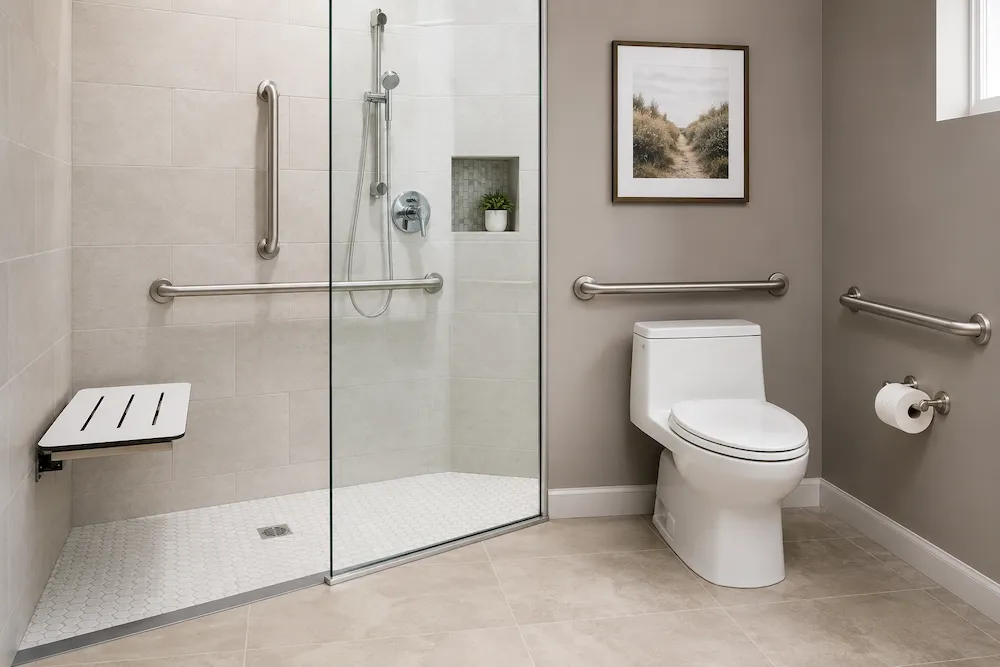
Grab bars are important safety products for bathrooms, toilets, and showers. They help people hold, stand, sit, turn, and move more safely. For elderly people, patients, disabled users, and people with limited mobility, the right grab bars can make daily bathroom use easier and safer.
Choosing the right grab bars is not only about buying a metal bar and fixing it to the wall. You need to think about the installation area, user needs, material, size, shape, surface, wall strength, and long-term safety. This guide explains how to choose suitable grab bars for showers, toilets, and bathrooms in simple language.
Why Grab Bars Are Important in Bathrooms
Bathrooms are one of the most common places where slips and falls happen. Floors can be wet. Users may need to sit down, stand up, step into a shower, or turn around in a small space. Without good support, these movements can be difficult and risky.
Grab bars provide a stable support point. Users can hold the bar when they need balance or strength. This is useful in homes, hospitals, nursing homes, hotels, rehabilitation centers, and public accessible bathrooms.
Main Benefits of Bathroom Grab Bars
- Help users sit down and stand up safely
- Provide support in wet bathroom areas
- Reduce the risk of slips and falls
- Improve accessibility for elderly and disabled users
- Make bathrooms easier to use for patients and caregivers
Understand Different Types of Grab Bars
Different bathroom areas need different grab bar types. A grab bar used beside a toilet may not be the same as a grab bar used inside a shower. Before choosing, it is important to understand the common types.
Straight Grab Bars
Straight grab bars are the most common type. They can be installed horizontally, vertically, or at an angle. They are often used beside toilets, inside showers, near bathtubs, and on bathroom walls.
A horizontal bar is useful for support while sitting, standing, or moving sideways. A vertical bar is useful when users need to pull themselves up or keep balance while stepping.
L-Shaped Grab Bars
L-shaped grab bars provide support in two directions. They are often installed near toilets or in shower areas. The vertical part helps with standing and balance, while the horizontal part helps with sitting, moving, and support.
This type is useful when users need more complete support in one corner or one side of the bathroom.
U-Shaped Grab Bars
U-shaped grab bars are often used around toilets. They may be fixed to the wall, fixed to the floor, or connected to both the wall and floor. They provide strong support on one or both sides of the toilet.
U-shaped bars are common in public accessible toilets, hospitals, and nursing homes.
Fold-Down Grab Bars
Fold-down grab bars are also called folding grab bars, flip-up grab bars, or drop-down support rails. They can be folded up when not in use and lowered when support is needed.
They are very useful beside toilets because they save space and provide strong support when users need to transfer from a wheelchair or stand up from the toilet.
Choose Grab Bars for Toilets
Toilet grab bars help users sit down, stand up, and transfer safely. This is one of the most important areas in an accessible bathroom.
For toilet areas, grab bars are usually installed beside the toilet or behind the toilet. The exact position depends on the bathroom layout, wall strength, user needs, and local accessibility requirements.
Common Toilet Grab Bar Options
- Straight grab bar beside the toilet
- Horizontal grab bar on the side wall
- Vertical grab bar near the toilet
- L-shaped grab bar for side support
- Fold-down grab bar beside the toilet
- U-shaped toilet support rail
What to Consider for Toilet Areas
- Is there enough space beside the toilet?
- Does the user need support on one side or both sides?
- Is the wall strong enough for installation?
- Does the user need wheelchair transfer support?
- Should the grab bar be fixed or foldable?
If the bathroom is small, a fold-down grab bar may be a good choice because it can be lifted when not needed. If the user needs strong daily support, a fixed bar may be better.
Choose Grab Bars for Showers
Shower areas are wet and slippery. Users may need to stand, turn, reach for soap, or sit on a shower seat. Good shower grab bars can provide important support during these movements.
Shower grab bars should be placed where users naturally need to hold. The bar should be easy to reach and comfortable to grip.
Common Shower Grab Bar Options
- Horizontal grab bar on the shower wall
- Vertical grab bar near the shower entrance
- Angled grab bar for standing support
- L-shaped grab bar in the shower area
- Grab bar near a shower seat
What to Consider for Shower Areas
- Where does the user enter the shower?
- Does the user stand or sit while showering?
- Is there a shower seat?
- Where is the shower control?
- Is the wall surface strong and waterproof?
In many shower areas, a vertical grab bar near the entrance helps users step in and out. A horizontal bar inside the shower helps users keep balance while standing or sitting.
Choose Grab Bars for Bathtubs
Bathtubs can be difficult to enter and exit, especially for elderly users and people with weak balance. A bathtub grab bar can help users step over the tub edge and lower themselves safely.
Bathtub areas may need more than one grab bar. One bar can help with entering and leaving the tub, while another can help with sitting or standing.
Useful Bathtub Grab Bar Positions
- Vertical bar near the tub entrance
- Horizontal bar along the side wall
- Angled bar for extra support
- Wall-mounted bar near the sitting area
If the user has serious mobility problems, a walk-in shower with grab bars may be safer than a bathtub.
Choose the Right Material
Grab bar material affects strength, safety, comfort, cleaning, and appearance. The most common materials include stainless steel, nylon-covered metal, aluminum, and plastic-covered metal.
Stainless Steel Grab Bars
Stainless steel grab bars are strong, durable, and easy to clean. They are widely used in hospitals, public bathrooms, hotels, and commercial buildings. They are suitable for wet areas because they have good corrosion resistance.
Stainless steel has a clean and professional look. However, the surface can feel cold to the hand, especially in colder environments.
Nylon-Covered Grab Bars
Nylon-covered grab bars usually have a metal inner structure and a nylon outer surface. They feel warmer and more comfortable to hold. They can also provide better grip than smooth metal surfaces.
This type is often used in hospitals, nursing homes, and accessible bathrooms where comfort and safety are important.
Plastic or PVC-Covered Grab Bars
Plastic-covered grab bars can be comfortable and easy to clean. They are often available in different colors. However, the internal structure should still be strong enough for safety.
When choosing this type, always check the strength, wall fixing method, and product quality.
Check the Surface and Grip
A grab bar should be easy to hold, even when the user’s hands are wet. The surface should not be too slippery. It should also be comfortable for daily use.
Good Grip Features
- Comfortable diameter
- Smooth edges
- Non-slip or easy-grip surface
- Not too large for the hand
- Easy to clean after use
A very smooth metal surface may look good, but it may not be the best choice for all users. In wet areas, grip safety is very important.
Choose the Right Size and Length
Grab bars come in different lengths. Common straight grab bars may be used in short, medium, or long sizes. The right length depends on the installation area and user movement.
A short grab bar may be enough for small support areas. A longer bar may be better along a shower wall or beside a toilet. The bar should be long enough for the user to hold easily during movement.
Size Questions to Ask
- Where will the grab bar be installed?
- How much wall space is available?
- Does the user need support while standing, sitting, or moving?
- Will the grab bar be used by different people?
- Is the bathroom for home, hospital, hotel, or public use?
Make Sure the Wall Is Strong Enough
A grab bar is only safe if it is installed on a strong wall. The bar must be fixed securely. If the wall is weak, the grab bar may become loose or fail when a user puts weight on it.
Before installation, check the wall material. Concrete walls, brick walls, and reinforced walls are usually stronger. For drywall or light wall panels, extra backing or special fixing methods may be needed.
Installation Safety Points
- Check wall strength before installation
- Use suitable screws and anchors
- Install the bar at the correct height
- Make sure the bar does not shake
- Follow supplier installation instructions
Consider the User’s Needs
Different users need different types of support. An elderly person may need a comfortable bar for balance. A wheelchair user may need a strong fold-down support rail for transfer. A patient in a hospital may need bars in several bathroom areas.
User Needs to Consider
- Age and mobility level
- Standing and sitting ability
- Wheelchair use
- Left-hand or right-hand support
- Need for caregiver assistance
- Bathroom size and layout
It is better to choose grab bars based on the real user and real bathroom layout, not only on product appearance.
Think About Cleaning and Maintenance
Bathrooms need regular cleaning. Grab bars should have a surface that is easy to wipe and does not collect dirt easily. This is especially important in hospitals, nursing homes, and public bathrooms.
Cleaning-Friendly Features
- Smooth surface with no sharp corners
- Good corrosion resistance
- Few gaps around the fixing parts
- Durable surface finish
- Material suitable for regular cleaning
Good maintenance helps the grab bar stay safe, clean, and professional for a long time.
Choose a Reliable Supplier
A reliable supplier can help you choose the right grab bar type, size, material, and installation method. This is important for hospitals, nursing homes, hotels, and public projects.
Before ordering, ask for product photos, material details, size options, load capacity information, installation instructions, and packaging details. For large projects, samples can help you check quality before bulk ordering.
Supplier Information to Ask For
- Product size and material
- Surface finish options
- Installation instructions
- Load capacity or strength information
- Custom color or size options
- Sample availability
- Quotation and delivery time
Conclusion
Choosing the right grab bars for showers, toilets, and bathrooms is an important safety decision. The right product can help users move with more confidence and reduce the risk of falls.
For toilets, consider side support, fold-down bars, or U-shaped support rails. For showers, consider vertical, horizontal, or L-shaped grab bars. For bathtubs, choose bars that help users enter, exit, sit, and stand safely.
Always check the material, grip, size, wall strength, installation method, and user needs before making a choice. A well-chosen grab bar is not only a bathroom accessory. It is an important safety product for daily life, healthcare spaces, and accessible building design.